Sterling’s Rally Pauses Ahead of Bank of England Decision
After early-year strength, the pound’s near term trajectory hinges on the Bank of England’s February 5 decision.

Key points
- GBP/USD enters early 2026 on firmer footing, building on a recovery that began in late 2022 as post-Brexit pessimism continues to fade.
- With the Federal Reserve holding rates steady on January 28, near-term focus shifts to the Bank of England, where rates are widely expected to remain unchanged in February—leaving GBP/USD increasingly sensitive to BoE guidance and the tone around near-term policy intentions.
- Sterling pulled back to around 1.3720 toward the end of January, with a more hawkish BoE potentially reopening the path above 1.38, while a dovish tone could push GBP/USD back toward the 1.36 area as markets reassess the near-term policy outlook.
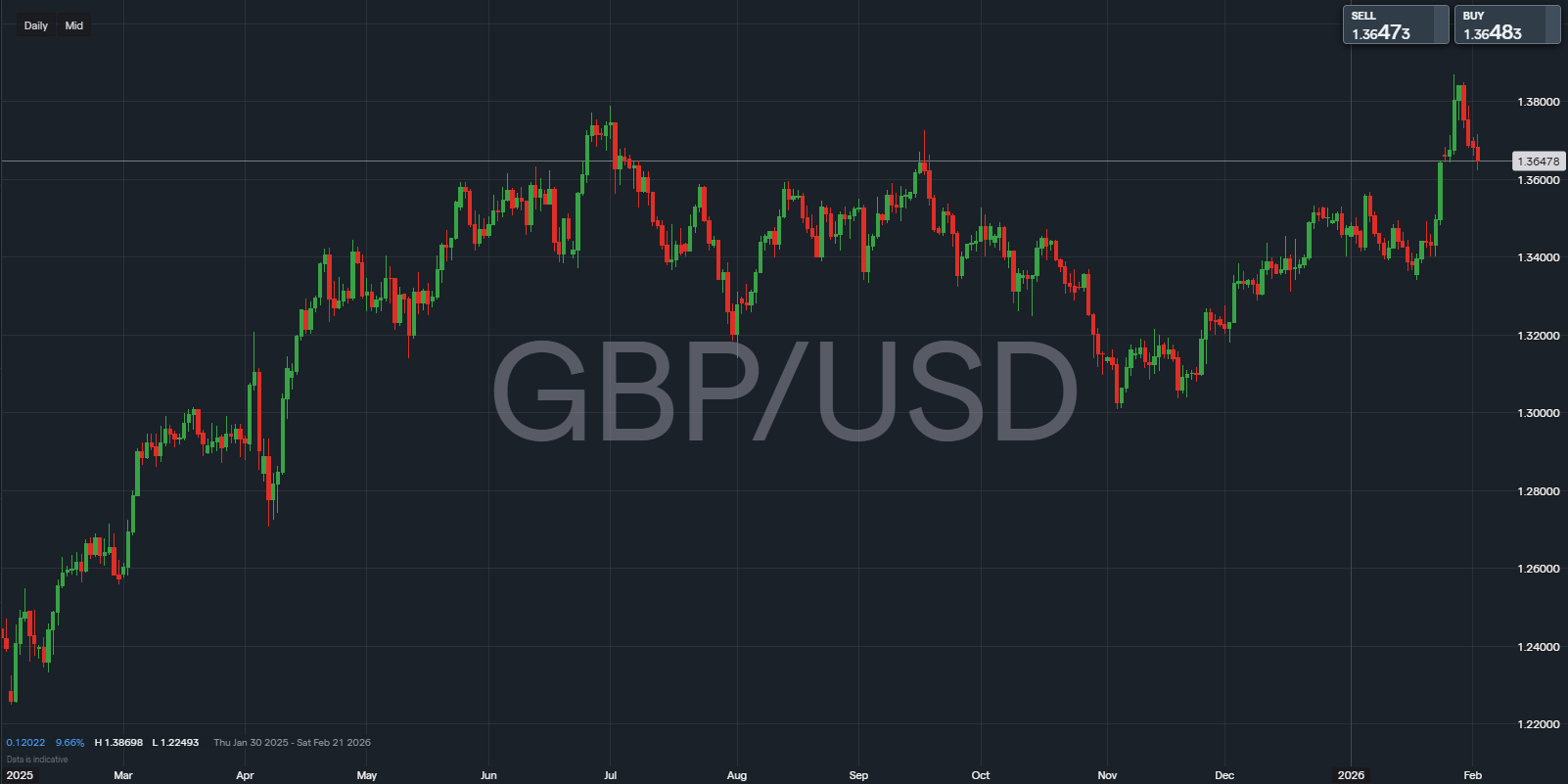
The British pound entered 2026 on solid footing, buoyed by policy tailwinds and a steady recovery in GBP/USD. The pair rallied roughly 2.5% in just over two weeks in January, surging from the mid-1.35s to above 1.38, before cooling back to below 1.37 in recent sessions.
Against that backdrop, attention turns to the Bank of England’s (BofE) February 5 policy decision, which now stands as the next major catalyst for GBP/USD.
With the Federal Reserve having already held rates steady in January, relative policy expectations now hinge on the BofE. February’s meeting may not deliver a rate adjustment, but it is likely to play a decisive role in how GBP/USD trades through the remainder of the first quarter.
Pound Strength Extends into 2026
Despite the recent pullback, sterling still enters February on firmer footing than at any point in the past several years. The broader recovery in GBP/USD dates back to late 2022, when the pair bottomed near 1.08 amid recession fears and post-Brexit pessimism.
That longer-term upstrend trend remained intact through 2025. GBP/USD began 2025 at about 1.24, then climbed steadily as U.S. rate expectations softened—finishing the year near the upper end of its multi-year range. In that context, January’s surge looks less like a breakout and more like a continuation of the recent trend.
Broader context still matters. GBP/USD remains well below its pre-Brexit highs above 1.50, a level that continues to serve as a key long-term benchmark rather than a near-term target. At this stage, the pound’s strength appears rooted in improving fundamentals and shifting policy expectations, rather than speculative exuberance.
The recent pullback toward the 1.37 area does not undermine the broader recovery, but it does highlight how sensitive near-term direction has become to marginal shifts in policy expectations.
In particular, the dollar has found renewed support following President Trump’s nomination of Kevin Warsh as the next Federal Reserve chair, a development that has led markets to reassess the longer-term path of U.S. monetary policy. That reassessment has, at least for now, tilted sentiment back in the dollar’s favor.
GBP/USD Daily Price History
Bank of England Set to Hold—But Guidance Is Critical
The Bank of England takes center stage on February 5, with markets overwhelmingly expecting policymakers to hold the benchmark rate at 3.75%. With the decision itself largely priced in, attention shifts to the tone of the statement, the vote split, and the accompanying guidance, rather than the headline outcome.
Recent UK data have complicated the near-term outlook. Private-sector activity has strengthened, retail sales have surprised to the upside, and inflation has edged further away from the BoE’s 2% target. While wage growth is expected to cool and inflation to ease later in the year, the evidence has not yet been decisive enough to justify another rate cut. The Monetary Policy Committee remains closely divided, suggesting the bar for further easing is higher than it appeared late last year.
A slim majority of economists now anticipate a rate cut as early as March, while many others expect the BoE to hold rates steady through the entire first quarter. As a result, forward guidance and updated economic projections are likely to matter more than the rate decision itself. As such, any sign that policymakers are comfortable waiting for additional data could help support the pound by slowing the erosion of its rate premium. By contrast, language that keeps a March cut firmly in play could weigh on sterling.
How the BoE Decision Could Affect GPB/USD
With GBP/USD hovering around the 1.37 area, the market appears to be pausing rather than reversing after January’s sharp rally. That dynamic puts added weight on the Bank of England’s February 5 messaging.
If the BoE strikes a more hawkish tone—emphasizing persistent inflation pressures, wage risks, or the need for additional evidence before easing—GBP/USD could push back above 1.38, reopening the upside after the recent cooling. A hawkish hold would suggest the Bank of England plans to move more slowly on rate cuts than the Federal Reserve, supporting further strength in sterling.
By contrast, a more dovish signal, particularly one that keeps a March (or early-Q2) rate cut in play, could cap the rally and push GBP/USD back toward the 1.36 area. As such, the BoE’s February 5 guidance is likely to define the near-term path for GBP/USD, barring an unexpected macro or policy shock.
Trading forex requires an account with a forex provider like tastyfx. It’s important to manage your risks carefully as losses can exceed your deposit. Ensure you understand the risks and benefits associated with trading leveraged products before you start trading with them.