NZD/USD Falls as RBNZ Hike Path Gets Messy
NZD/USD slipped as the U.S. Dollar strengthened and traders looked ahead to this week’s RBNZ decision, where inflation risk and weak growth leave policymakers boxed in.


NZD/USD fell as much as half of one percent to start the week as the U.S. Dollar regained ground coming out of the holiday weekend. U.S. yields were mixed, but the broader dollar tone improved as markets wait for Wednesday’s Federal Reserve minutes and reassessed how much room the Fed really can ease – or worse yet, have to tighten – while inflation remains sticky. That left the New Zealand Dollar exposed, especially after a rough stretch where global growth concerns, softer commodity sentiment, and fading risk appetite have weighed on higher-beta currencies.
In New Zealand, the focus is squarely on the RBNZ’s July 8 policy decision. The Official Cash Rate (OCR) sits at 2.25%, but the debate has shifted from easing risk to whether the central bank needs to gradually remove accommodation as inflation stays above target. The limiting factor for delivering a rate hike is growth. The IMF recently warned that New Zealand’s recovery has been delayed by the oil shock and global uncertainty, with inflation expected to stay above the RBNZ’s target band through year-end. That leaves the RBNZ with an ugly, almost stagflation-like mix: inflation too high to turn dovish, growth too soft to sound aggressive.
NZD/USD Daily Price History
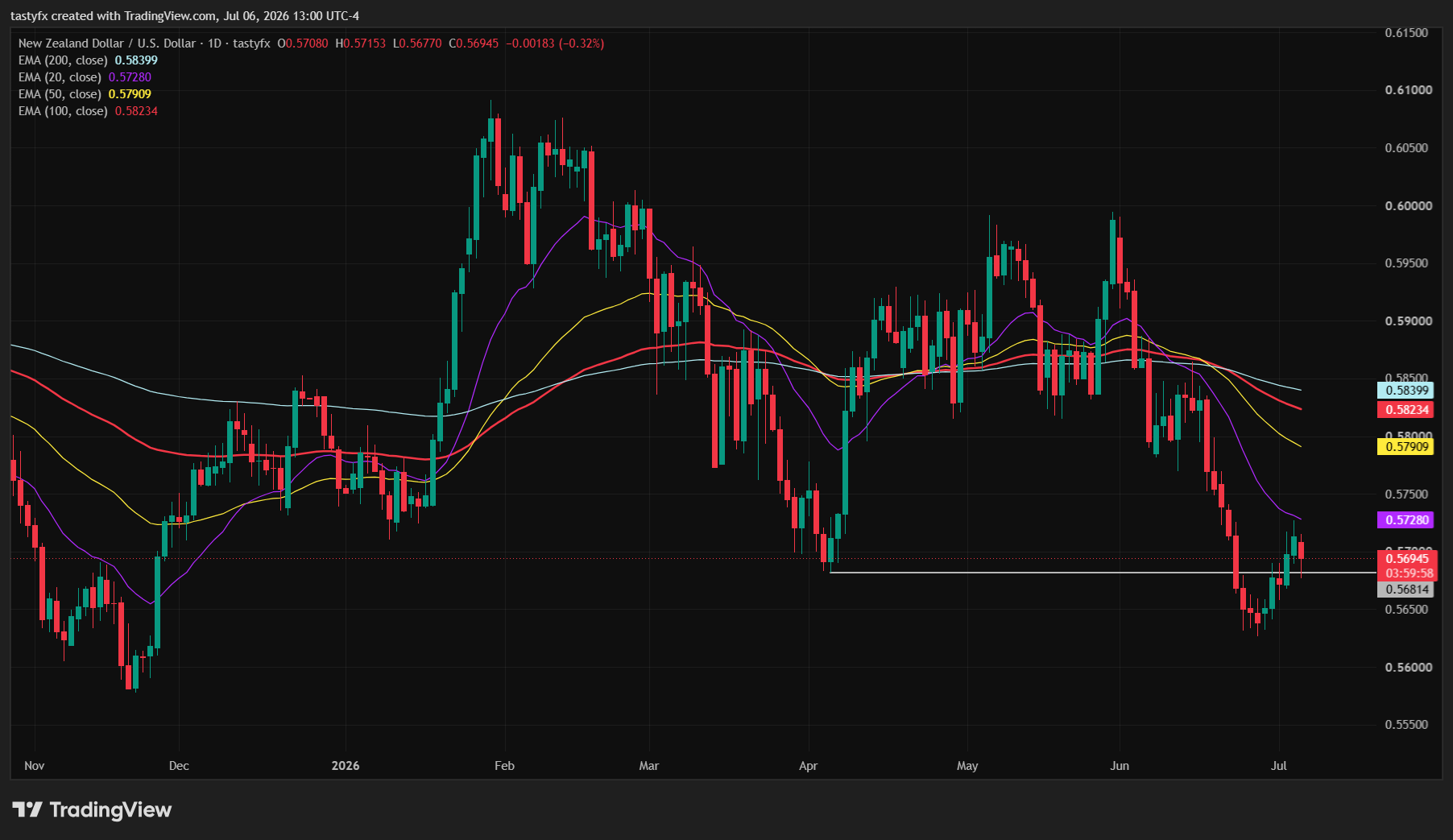
In the above chart, NZD/USD is struggling to establish a bottom after hitting fresh yearly lows within the past two weeks. The rebound has seen a bearish evening star candlestick pattern emerge against the 1-month moving average, suggesting that recent gains haven’t been significant enough to confidently call a durable low. Similarly, a close below 0.5681 would mean failure to retake the April swing low and would offer greater confidence that a return to the yearly low at .5627 could be revisited soon.
Trading forex requires an account with a forex provider like tastyfx. It’s important to manage your risks carefully as losses can exceed your deposit. Ensure you understand the risks and benefits associated with trading leveraged products before you start trading with them.