Yields are moving. Which ones matter for FX?
Spot FX only pays the overnight rate. So why did a 30-year story move the dollar more than 1%?

Watch the video
The long end is running out of control
The long end of the curve was already a story heading into midweek, sitting at highs dating back to 2007. Then Wednesday morning the Treasury added a wrinkle by signaling it was prepared to buy back a handful of long-end bonds. Buybacks are well within the Treasury's normal function, so the act itself is not the headline. The timing is. This is the kind of move you would typically expect closer to mid-November, and doing it now sent a reversion through yields and triggered outsized moves in gold, in the 10-year, and in the dollar.
Spot FX sits at the front end
If you were to place the dollar somewhere on the yield curve, spot FX sits right at the front end. The yield you earn for holding dollars in a currency pair is tied to the overnight rate, and the overnight rate is set by the Fed. That is why tracking Fed expectations matters so much for FX and why the rest of the curve usually does not register. The overnight rate is a long way removed from the 2-year, let alone the 10-year or the 30-year. Which is exactly what makes this week's move peculiar.
So why did the dollar move?
Certain pairs moved over 1.5% on the day, an unusually large move for the summer. The direction fits the textbook read, but the size does not. The overnight differential barely changed, so carry cannot account for a move that large. This was a risk premium storyline wearing a bond market disguise. What the announcement did was shake investor confidence in US assets broadly. Normally, rising Treasury yields can pull demand into the dollar by proxy, since investors need dollars to buy Treasuries in the first place. That did not happen here. Regardless of which direction yields went, demand flowed out of the dollar, and the Treasury's unusual timing sent that demand elsewhere. Gold had an absolute ripper of a day.
Which FX pairs trade most with bonds?
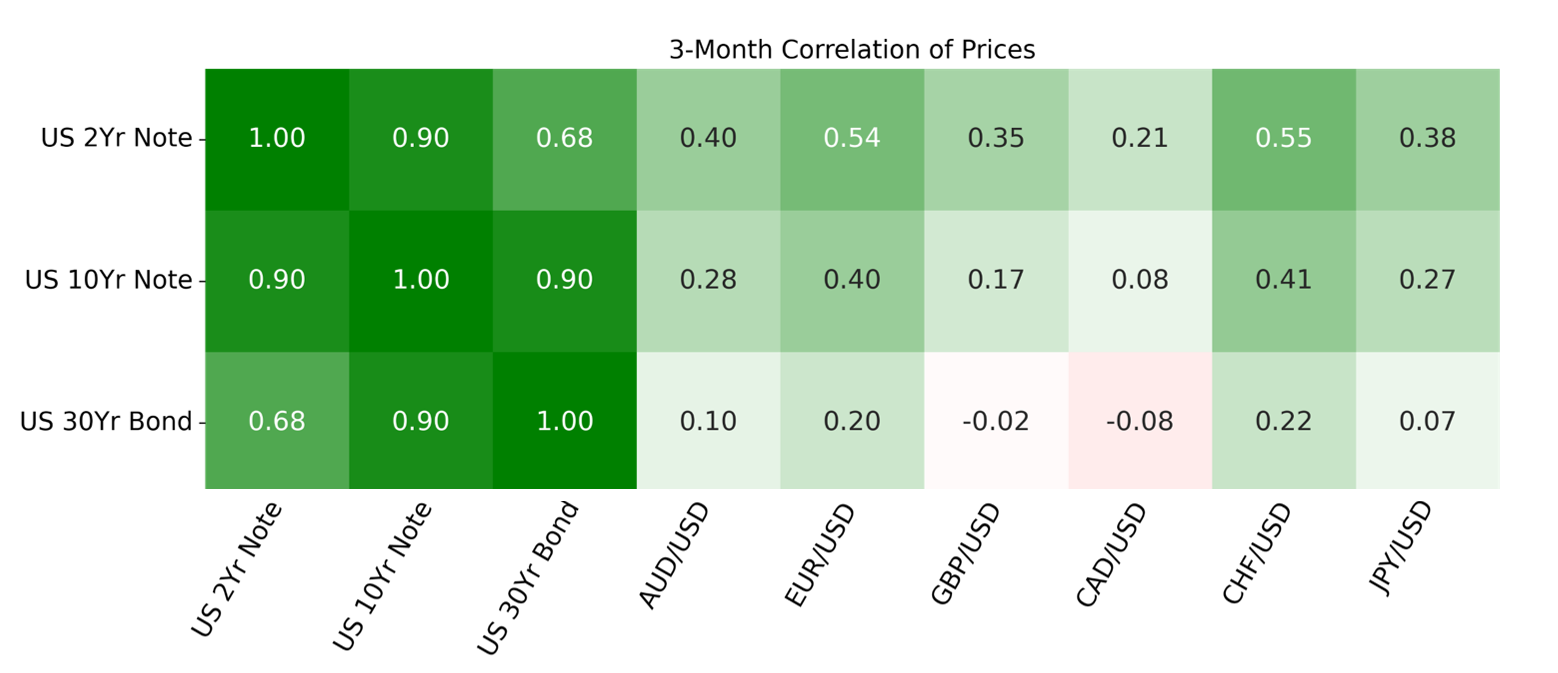
Looking at three-month correlations between the major dollar pairs and Treasuries across the curve, the thesis holds up. Correlations are strongest at the 2-year and fade as you move into the 10-year and 30-year. That answers the question directly: on a normal day, an FX trader should not care what the 30-year is doing. Those long-end correlations are close to unchanged over the past three months, and some are even negative. Today was an outlier.
Among individual pairs, the euro and the Swiss franc lead, and you could see that correlation playing out in real time, with USD/CHF moving over 1.5% to the downside on the session.
 Source: dxFeed
Trading forex requires an account with a forex provider like tastyfx. It’s important to manage your risks carefully as losses can exceed your deposit. Ensure you understand the risks and benefits associated with trading leveraged products before you start trading with them.